
(and how couples actually decide now)
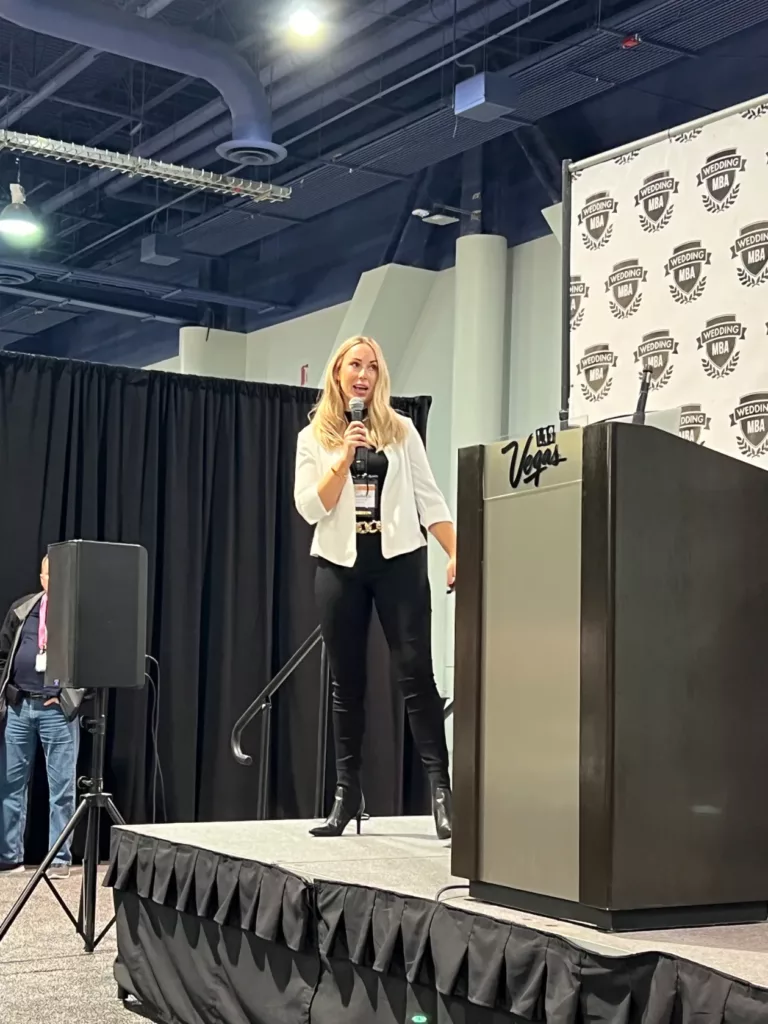
I presented this in March 2026 at How to Rendezvous in Nashville. This is the exact framework.
Hi, I’m Elizabeth, owner of Snowmad Digital.
I spend a lot of my time inside inquiry forms, pricing guides, analytics dashboards, and real conversations with couples trying to answer one thing:
How are people actually making decisions?
Not how we think they do. Not how the “funnel” says they should.
What they actually do.
Because if you’ve felt like things are a little off lately, you’re not wrong.
Leads feel different.
Inquiries feel weirder.
People ghost more.
Some couples show up hyper-informed. Others feel all over the place.
It’s easy to blame the market, pricing, or “bad leads.”
But there’s a bigger shift happening underneath all of it.
Search Didn’t Disappear
It Expanded
This is the part that gets overcomplicated.
Search didn’t die.
It didn’t get replaced.
It expanded.
For years, search meant one thing:
Type something into Google. Click a few links. Make a decision.
Now it looks completely different.
Couples don’t just search anymore. They:
- talk things out
- compare options
- upload PDFs
- ask for reassurance
- try to sanity-check decisions
They’re not typing keywords.
They’re having conversations.
Think about how you use ChatGPT for a second.
You’re not searching “best CRM for small business.”
You’re asking:
- What should I actually be using based on how I work
- Is this overkill
- What am I not thinking about
That’s exactly how couples are planning weddings and searching for venues now.
Same behavior. Higher stakes.
And that changes everything about how decisions get made.
Couples Don’t Search by Platform
They Search by State of Mind
One of the biggest mistakes I see is people trying to map behavior to platforms.
TikTok vs Google.
Young vs old.
That’s not what’s happening.
Couples move through different modes depending on where they are mentally.
Most of them hit all three.
Sometimes in the same day.
Talkers (AI)
This is where a lot of decisions actually start now.
These couples aren’t looking for a list.
They’re trying to think something through.
They want:
- guidance
- reassurance
- help narrowing things down
They’re asking:
Is this venue worth it
What questions should I be asking
What actually matters here
And this is the part people underestimate:
They are uploading your pricing guide into ChatGPT.
And another venue’s.
And asking it to compare them.
They’re not asking you.
They’re asking AI.
Watchers (Social)
Not everyone processes decisions by reading or talking.
Some people need to see it.
This is where social comes in.
They’re watching:
- walkthroughs
- ceremony setups
- behind-the-scenes clips
- real couples interacting with the space
They’re not analyzing yet.
They’re building a feeling.
This is where:
- desire starts
- familiarity builds
- trust begins
If they don’t see you here, you don’t exist yet.
Bookers (Google)
Eventually, most couples land here.
This is the action stage.
They search:
- wedding venues near me
- venue with lodging
- pricing
- availability
Google still owns this moment.
This hasn’t changed.
But what has changed is everything that happens before it.
The real pattern
The biggest misconception is that this is a funnel. It’s not.
It’s movement.
It looks like:
- scroll
- watch
- think
- open ChatGPT
- compare
- close it
- come back later
- Google you
- leave
- come back again
- decide
And a lot of that decision happens before you ever hear from them.
What AI Is Actually Doing
This is where people either overhype or completely misunderstand it.
AI is not ranking you.
It’s not deciding who “wins” search.
It’s doing something much simpler and more important:
It’s learning how to explain you.
It builds that understanding from patterns:
- your website
- your FAQs
- your reviews
- your pricing explanations
- how consistent you are across platforms
Here’s the simplest way to think about it:
| Platform | What it does |
|---|---|
| Helps couples find you | |
| AI | Helps couples understand you |
| Your website | Confirms or kills the decision |
AI is essentially reading your entire digital presence and forming a summary.
If that summary is unclear, it struggles.
If it struggles, it doesn’t recommend you confidently.
And this is the shift most people haven’t fully absorbed yet:
Everything you publish is no longer just marketing.
It’s input.
It’s training data.
Why the Funnel Feels Broken
For years, the model was simple:
Search → Website → Booking
That model assumed something important:
That thinking happens after discovery.
That’s no longer true.
Now it looks more like this:
Inspiration → Private Research → Action → Validation → Booking
Let’s break that down:
- Social creates the idea
- AI helps them think it through
- Google captures intent
- Your site validates a decision already forming
This explains a lot of what people are feeling right now.
Why couples:
- ghost
- ask questions already answered
- disappear mid-conversation
- come in highly opinionated
Here’s the uncomfortable truth:
A lot of decisions are already made before the inquiry.
Which means:
The inquiry is not the start.
It’s the near end.
The Misread: “No One Is Reading”
I hear this constantly.
“No one reads our website.”
That’s not what’s happening.
The people who don’t read will ask you everything.
The people who do read often never reach out.
They’re:
- comparing quietly
- processing privately
- using AI to fill in gaps
So it feels like no one is engaging.
In reality, the most serious decision-makers are just doing it without you.
That silence gets interpreted as disinterest.
It’s not.
It’s independent decision-making.
Where Most Venues Lose
This is the part that’s actually fixable.
Vague language.
Words like:
- elegant
- timeless
- charming
- affordable
They sound good.
They don’t help anyone decide.
And AI can’t use them.
AI needs:
- specifics
- constraints
- details
- clarity
Humans do too, they just tolerate fluff longer.
What clarity actually looks like
Instead of:
We have a beautiful backup plan
Say:
If it rains, ceremonies move indoors to a covered pavilion that seats 180. We make the call by 10 a.m. and handle the transition.
Instead of:
All-inclusive experience
Say:
Includes catering, bar, tables, chairs, linens, and a day-of coordinator. Does not include florals or DJ.
Instead of:
Spacious venue
Say:
Fits up to 220 guests seated. Most weddings here range from 120 to 180.
This is what allows:
- couples to compare
- AI to explain
- decisions to happen faster
Clarity beats cleverness.
Every time.
Is SEO Dead?
No. I can promise you that SEO for wedding venues is not dead.
Google still matters.
A lot.
- rankings still drive traffic
- search still captures intent
- SEO still works
What changed is not whether people find you.
It’s what happens after they do.
Now:
- SEO gets you into the conversation
- AI shapes how you’re evaluated
- clarity determines if you’re chosen
That’s the shift.
What You Can Actually Control
This is where people expect something complicated.
It’s not.
You don’t need:
- more platforms
- more content
- more tools
You need better explanations.
Start here
- Rewrite your FAQs like real answers
- Replace vague language with specifics
- Clearly explain what’s included and what’s not
- Show exactly how your venue works
- Define who your venue is for and who it’s not
Run this test
Take your:
- website
- pricing guide
- FAQs
Put them into ChatGPT.
Ask:
- What kind of venue is this
- Who is this best for
- What would confuse someone
If the answers are vague, your positioning is vague.
The Real Shift
Couples are deciding earlier.
Much earlier.
And a lot of that decision-making is happening:
- privately
- silently
- inside AI
Before you ever hear from them.
Which means:
Visibility is not enough anymore.
Ranking is not enough.
If You Remember One Thing
Couples are deciding before they contact you.
AI is part of that process.
Clarity is the advantage now.